Your car's transmission needs regular care to work properly. But let's be honest, a lot of drivers feel confused about which service makes sense.
A transmission service replaces some of the old fluid and the filter. A transmission flush uses special equipment to push out all the old fluid and replace it with new fluid.
Both options help your transmission, but they work in different ways and serve different purposes.
At DMC Automotive Repair, we talk to customers every day who want to know which option fits their vehicle. According to AAA, transmission repairs can cost between $1,800 and $3,500, making it one of the priciest car repairs out there.
Proper maintenance can help you avoid these expensive problems.
We've seen firsthand how regular transmission care extends the life of our customers' vehicles. As the experts at AAMCO note, regular transmission maintenance can help prevent costly repairs and extend the life of your vehicle.
Studies show that dirty transmission fluid causes up to 90% of all transmission failures. Understanding the difference between a service and a flush helps you make the best choice for your car and your wallet.
What is a Transmission Service?
A transmission service involves changing the fluid, replacing the filter, and inspecting key parts to keep your transmission running properly. We perform this maintenance at specific intervals based on your vehicle's needs.
This process usually removes about 40-60% of the total transmission fluid in your system.
We start by lifting your vehicle and finding the transmission pan. After draining the fluid, we remove the pan to get to the filter.
We clean the pan, swap out the filter, and reinstall everything with a new gasket. The process usually takes about 1-2 hours.
We then add the correct amount and type of new transmission fluid your vehicle needs.
Components Inspected and Replaced
During a transmission service, we replace several important parts:
- Transmission filter - catches debris and contaminants
- Pan gasket - prevents fluid leaks
- Drain plug seal - ensures a tight seal
We also check the transmission pan for metal shavings or debris. These bits tell us about the internal state of your transmission.
The amount and type of material helps us spot potential problems. We look at the old fluid for color, smell, and texture.
If the fluid's dark brown or black, the service is overdue. A burning smell usually means there's internal damage that needs attention.
Recommended Service Intervals
Most manufacturers recommend a transmission service every 30,000 to 60,000 miles. Your specific interval depends on your vehicle make, model, and how you drive.
We can look up your specific vehicle's requirements and maintenance history to figure out the right schedule for you.
What Is a Transmission Flush?
A transmission flush uses specialized equipment to force new fluid through your transmission system while pushing out all the old fluid. This process reaches more areas than a standard service and exchanges nearly 100% of the fluid.
How a Flush Differs from a Standard Service
The main difference between these two services is how we remove the old fluid. During a standard transmission service, we drain the fluid from the pan, which only removes about 20-40% of the total fluid.
The rest stays in the torque converter, cooler lines, and valve body. A flush works differently.
We connect a machine to your transmission's cooler lines and use pressure to push new fluid through the entire system. This forces out almost all the old fluid, not just what's in the pan.
Key Differences:
- Fluid Removal: Flush removes 95-100%, service removes 20-40%
- Equipment: Flush needs special machines, service uses basic tools
- Pressure: Flush uses machine pressure, service relies on gravity
- Time: Flush takes 30-60 minutes, service takes 45-90 minutes
Steps Involved in a Transmission Flush
We start by warming up your vehicle to bring the transmission fluid to operating temperature. This helps the fluid flow better during the flush process.
Next, we connect our flush machine to the transmission cooler lines. We run the engine while the machine pumps new fluid in and pushes old fluid out.
The machine monitors the fluid color to know when the exchange is complete. We usually cycle 12-20 quarts of fluid through your transmission during this process.
This ensures we've replaced all the old fluid with fresh, clean fluid.
Potential Benefits and Risks
A flush can remove built-up deposits and contaminants that a standard service might miss. This provides cleaner fluid throughout the entire transmission system, not just in the pan.
However, flushes have some risks. The high pressure can dislodge debris that may clog narrow passages in your transmission.
If your transmission already has problems, a flush can sometimes make them worse. We don't recommend flushes for vehicles with high mileage or known transmission issues.
The old fluid might be helping worn seals and clutches grip properly. Fresh fluid with different properties could cause slipping or other problems in these cases.
Transmission Service vs. Transmission Flush
A transmission service replaces some of your transmission fluid and cleans the pan. A flush exchanges nearly all the old fluid using specialized equipment.
The main differences come down to how much fluid gets replaced, the method used, and which option works best for your specific vehicle and situation.
Key Differences and Similarities
A transmission service at our shop means we remove the transmission pan to drain 40-60% of the old fluid. We replace the filter, clean the pan and magnet, install a new gasket, and refill with fresh fluid. This method lets us inspect the pan for metal shavings or debris that show internal problems.
A transmission flush uses a machine connected to the transmission cooler lines to push new fluid through while removing the old fluid. This process exchanges 90-95% of the fluid without removing the pan. We don't replace the filter or inspect the pan during a flush.
Both services use the correct transmission fluid for your vehicle. Both aim to maintain your transmission's health and performance.
The key difference is that a service gives us a chance to physically examine internal components, while a flush provides more complete fluid replacement.
Choosing the Right Option for Your Vehicle
We recommend a transmission service for vehicles with 30,000-60,000 miles or those that have been regularly maintained. This works well when your fluid is still relatively clean and you want preventive maintenance with internal inspection.
A flush makes sense for vehicles with clean maintenance records where the fluid appears dark but the transmission still shifts smoothly.
We don't recommend flushes for transmissions with existing problems or those that have never been serviced. The high pressure can dislodge debris and cause blockages in a neglected transmission.
Your vehicle's manufacturer recommendations matter most. Some manufacturers specifically advise against flushes, while others approve both methods.
We check your owner's manual and service history before recommending either option.
Expert Recommendations and Preventive Maintenance
Following your vehicle manufacturer's service schedule protects your transmission from costly damage. Recognizing early warning signs helps you address problems before they become major repairs.
Manufacturer Guidelines
We always tell customers to check their owner's manual first. Most manufacturers recommend transmission service every 30,000 to 60,000 miles for normal driving conditions.
Severe driving conditions require more frequent service. This includes towing heavy loads, stop-and-go traffic, extreme temperatures, and mountain driving.
Under these conditions, we recommend service every 15,000 to 30,000 miles. Some newer vehicles claim "lifetime" transmission fluid, but we don't buy that based on what we see in our shop.
We recommend changing the fluid at least every 100,000 miles, even if the manufacturer says otherwise. The type of transmission fluid matters too.
Your manual specifies the exact fluid your transmission needs. Using the wrong fluid can damage seals and cause shifting problems.
Signs Your Transmission Needs Attention
Some symptoms make it pretty clear your transmission needs service soon. If you spot dark or burnt-smelling fluid, that's a red flag. The fluid's probably broken down and can't protect your transmission anymore.
Fresh transmission fluid looks bright red and barely has any smell. Delayed engagement when shifting from park to drive often means low fluid or worn-out parts inside.
Rough or hard shifts between gears point to fluid that's not doing its job. If you hear whining or grinding, or the gears slip, it's time to act fast.
We usually check fluid with a dipstick during regular oil changes. If any of these issues pop up, it's smarter to bring your car in before things get worse.
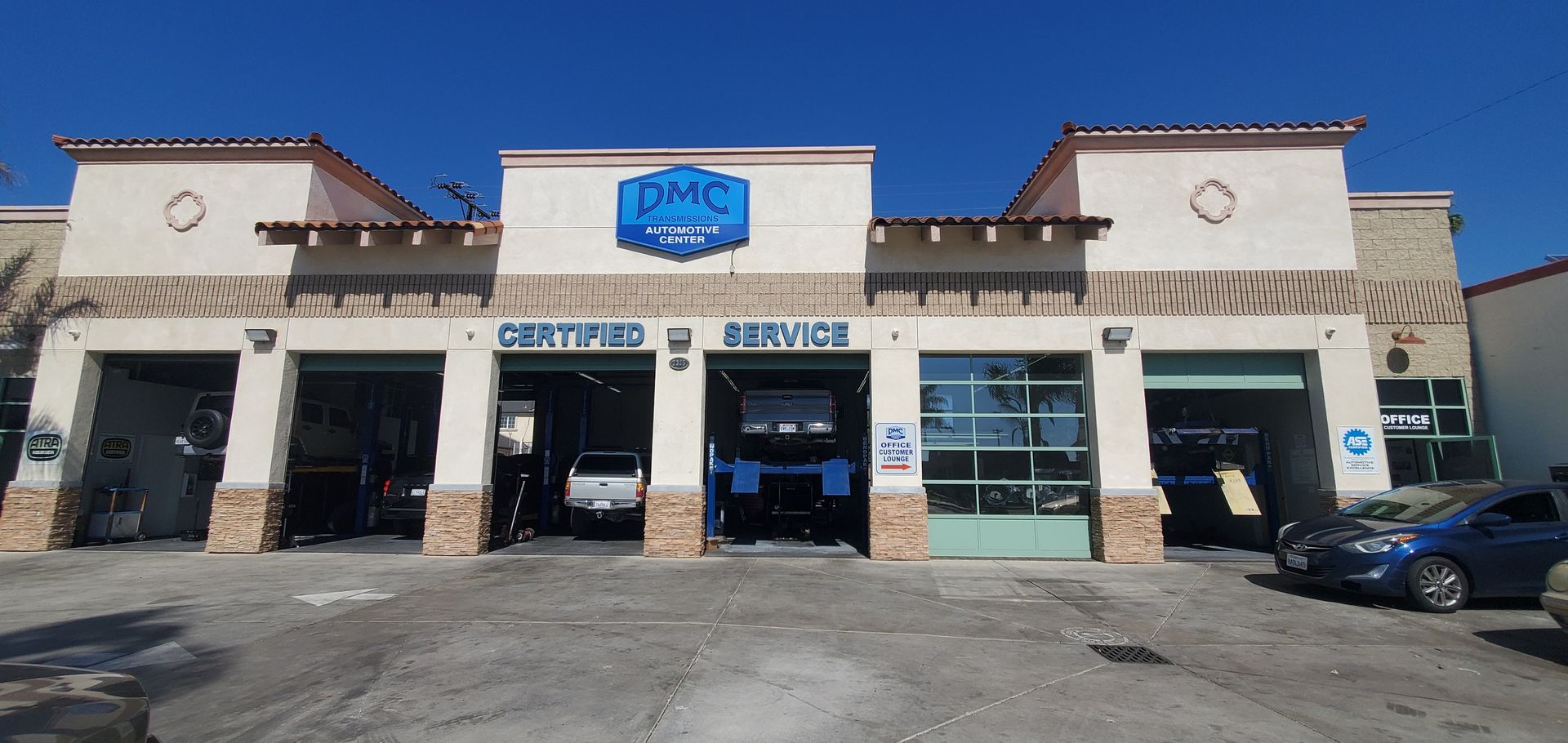
Does your vehicle’s transmission need service? Come visit DMC Automotive Repair at 2325 E Thompson Blvd in Ventura.