Expert Transmission Repair: Keeping Your Vehicle Running Smoothly in Ventura, CA

By JR Luna | LinkedIn September 2, 2025

When it comes to vehicle maintenance, transmission repair often sits high on the list of concerns for many drivers. At DMC Automotive Repair in Ventura, CA, we understand the anxiety and confusion that can accompany transmission issues. Our mission is to empower you with the knowledge you need to make informed decisions about your vehicle's health and keep you safely on the road.

Understanding the Importance of Your Vehicle's Transmission

The transmission in your vehicle is more than just an expensive component; it is the vital bridge between your engine and the wheels, allowing you to change gears and control your speed. Without a functioning transmission, your car could face serious drivable issues, from the inability to shift gears to experiencing complete power loss.

At DMC Automotive Repair, we prioritize educating our customers in Ventura, CA about the signs and symptoms of transmission trouble. Recognizing these early warnings can save you time, money, and the inconvenience of a breakdown.

Common Signs Your Transmission Needs Attention

The first step in addressing transmission issues is to spot the signs early. Common indicators of transmission problems include:

  • Slipping gears: If your gears slip unexpectedly, especially during acceleration, it's time to seek a professional assessment.
  • Unusual noises: Grinding or clunking sounds when changing gears indicate potential mechanical trouble.
  • Delayed engagement: A delay in the car moving after you switch gears suggests transmission problems.
  • Fluid leaks: Transmission fluid leaks can lead to significant damage if not addressed promptly.

If you experience any of these symptoms, bring your car to DMC Automotive Repair in Ventura. Our team will conduct a thorough inspection and determine the best course of action for your transmission.

Why Choose DMC Automotive Repair for Your Transmission Needs?

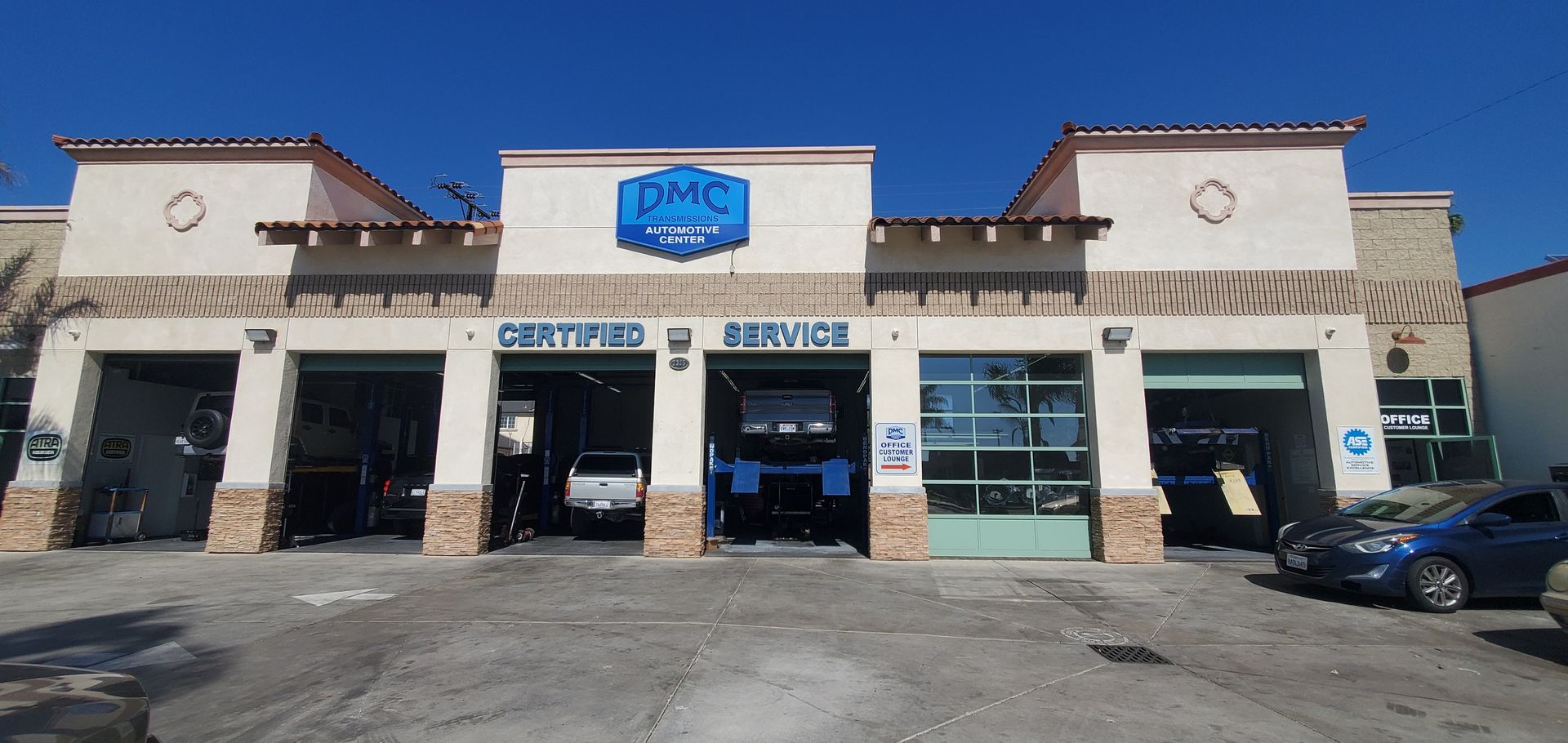
Located in the heart of Ventura, CA, DMC Automotive Repair is your go-to source for expert transmission repair. Our team of skilled technicians has years of experience handling a wide array of transmission issues, from minor repairs to complete overhauls.

We believe in transparency and communication. Throughout the repair process, we'll keep you informed every step of the way, explaining the diagnosis, outlining your options, and detailing the costs involved. Our goal is to provide peace of mind through comprehensive, honest service.

Preventive Measures to Extend Transmission Life

Preventive maintenance is key to avoiding costly transmission repairs. Here are some tips on how to extend your transmission's lifespan:

  • Regularly check and replace transmission fluid as recommended by your vehicle manufacturer.
  • Avoid overloading your vehicle, which can put extra stress on the transmission.
  • Pay attention to your vehicle's performance and have it inspected if you notice any unusual behaviors.

At DMC Automotive Repair, we offer routine maintenance services to keep your transmission in optimal condition. Schedule a regular check-up with us to avoid unexpected issues.

Conclusion: Trust DMC Automotive Repair in Ventura, CA

Your vehicle's transmission is a crucial component of its overall performance and safety. Suspected issues should not be ignored, and preventive care is a wise investment. At DMC Automotive Repair, our dedication to quality service and customer satisfaction sets us apart as a leading auto shop in Ventura, CA.

Feel free to visit DMC Automotive Repair to discuss any concerns regarding your transmission or other automotive needs. Our team is here to offer the expertise and support you deserve to keep your vehicle running smoothly. Schedule an online appointment with us today, and let us help you drive with confidence!
By JR Luna | LinkedIn July 27, 2026
Brake pads are one of the most frequently replaced components on any vehicle, but the honest answer to how long they last is that it depends. Most pads are rated to last somewhere between 30,000 and 70,000 miles, but that range is wide for a reason. Where you drive, how you drive, and what type of pads are installed all play a role. For drivers in Ventura, local conditions shape brake pad life more than most people expect. What the Manufacturer Numbers Actually Mean When a brake pad manufacturer lists a lifespan estimate, that figure reflects controlled testing, not the reality of daily driving in coastal California. The 30,000 to 70,000 mile range assumes a mix of city and highway use under moderate conditions. Ventura driving does not always cooperate with those assumptions. The grades around Ondulando and the foothills put consistent downhill demand on the front brakes. Stop-and-go traffic through Midtown Ventura and along Thompson Boulevard and Victoria Avenue during peak hours generates repeated heat cycles that accelerate wear. Coastal humidity and marine air, while not directly wearing the pads themselves, contribute to rotor surface rust that can affect how pads bed in and wear over time. After more than 18 years servicing vehicles in Ventura, we see this pattern consistently. Vehicles driven mostly in local stop-and-go traffic come through our shop with pads worn well below the 50,000-mile midpoint far more often than national averages suggest. The combination of repeated heat cycles in congested city traffic and the steady grade demands east of the city adds up faster than most drivers expect. Driving Habits That Shorten Brake Pad Life A few habits move your pads toward the lower end of that lifespan range faster than most drivers realize. Riding the brakes rather than coasting is one of the most common. On descents toward Montalvo or coming off the foothills east of the city, sustained light brake pressure generates more heat and more wear than a few firm, deliberate stops followed by coasting. Following too closely forces more frequent and more abrupt braking. Even low-speed stops under heavy demand add up over thousands of miles. Vehicle weight matters as well. Trucks, SUVs, and vehicles that regularly carry heavy loads or tow place more demand on the braking system. A loaded pickup stopping repeatedly in traffic will wear through pads considerably faster than a compact sedan driving the same route. Waiting too long between inspections allows pads to wear completely through. When pad material reaches the metal backing plate, metal presses directly against the rotor during every stop, and that damages both components at once. The vehicles we see with the most extensive brake repairs are almost always the ones where the early warning squeal was brushed aside for several weeks. Once the grinding begins, the rotor typically needs replacement alongside the pads, which adds considerably to the overall repair cost. Driving Habits That Help Your Pads Last Longer The good news is that a few adjustments can meaningfully extend the life of your pads. Increasing your following distance on busy stretches like the 101 gives you room to decelerate gradually rather than brake sharply. Anticipating traffic flow and lifting off the accelerator early lets the vehicle slow before you need the pedal. On long downhill stretches, using a lower gear to let engine braking do some of the work reduces how much demand lands on the brake system. These are not complicated changes, but over thousands of miles they add up to noticeably longer pad life and lower maintenance costs. How to Tell When Pads Are Ready for Replacement Mileage is a useful reference point, but your brakes will usually signal when they need attention before the numbers say anything definitive. A high-pitched squeal when you apply the brakes is the most common first sign. Most pads include a small metal wear indicator designed to contact the rotor and produce that sound when material gets thin. It is a built-in warning system, not an accident. A grinding or growling sensation is a more serious signal, indicating that pad material has worn through entirely. A pulsing pedal, longer stopping distances, or a brake warning light on the dashboard all warrant a prompt inspection. The Motorist Assurance Program , an automotive industry consumer organization, recommends having brake pads inspected at every oil change or tire rotation to catch wear before it becomes a safety concern. That recommendation aligns with what we observe in the shop and with broader safety data. According to Automotive Fleet , poor brake condition is a contributing factor in more than 20 percent of vehicle collisions. Staying ahead of brake wear is one of the most straightforward ways to protect yourself on the road. Ready to find out exactly where your brake pads stand? Our ASE-certified technicians will measure pad thickness, check your rotors, and give you a clear picture of what your vehicle needs and what it does not. Book your inspection at DMC Automotive Repair . DMC Automotive Repair is a licensed California Automotive Repair Dealer. You can verify our shop license through the California Bureau of Automotive Repair shop locator , and our team's ASE certifications are verifiable directly through the National Institute for Automotive Service Excellence . FAQs Is 30,000 miles too soon to need new brake pads? Not necessarily, especially for Ventura drivers. Heavy local traffic and hilly terrain can shorten pad life considerably below the national average. If you are hearing squealing or noticing longer stopping distances, have them inspected regardless of mileage. Should front and rear brake pads be replaced at the same time? Not always. Front brakes handle the majority of stopping force and typically wear faster, so replacing them separately is common. A proper inspection will tell you exactly what each axle needs. What are the warning signs that my brake pads need to be replaced? Listen for a high-pitched squeal when you apply the brakes, which is the built-in wear indicator doing its job. Grinding, a pulsing pedal, or longer stopping distances are more urgent signals that the pad material may be fully worn through. At DMC Automotive Repair, we check pad thickness as part of every inspection so you always have an accurate picture. Our Location DMC Automotive Repair Address: 2325 E Thompson Blvd, Ventura, CA 93003 Phone Number: (805) 652-2221 Hours: Monday–Friday, 7:00 AM – 6:00 PM
cars in highway traffic
By JR Luna | LinkedIn July 24, 2026
Wondering why your brakes squeal? DMC Automotive Repair in Ventura explains the common causes and when that noise means it is time for service.
By JR Luna | LinkedIn July 16, 2026
Does your car pull when braking? DMC Automotive Repair in Ventura explains the common causes and why this safety issue needs prompt attention.
car on the highway
By JR Luna | LinkedIn July 2, 2026
Learn the warning signs that mean it is time for brake repair in Ventura. DMC Automotive Repair shares what to watch for and when to act.
By JR Luna | LinkedIn June 26, 2026
Expert cooling system repair at DMC Automotive Repair in Ventura, CA. Keep your engine cool and efficient. Call us today!
brake repair at DMC Automotive Repair
By JR Luna | LinkedIn June 25, 2026
Brake pads vs rotors, what is the difference? DMC Automotive Repair in Ventura explains each part and when to replace them to stay safe.
By DMC Automotive Repair May 29, 2026
Discover expert oil change services at DMC Automotive Repair in Ventura, CA. Enhance your vehicle's performance. Schedule an appointment today!
vehicle with the hood up
By JR Luna May 21, 2026
Millions of cars now use stop-start technology to save fuel. But is it secretly wearing out your transmission? We separate fact from fear with expert insight.
heavy traffic in a city
By JR Luna May 14, 2026
Stop-and-go traffic does more damage to your vehicle than highway miles ever will. Learn the science behind heat buildup and how to protect your clutch and transmission.
By JR Luna May 8, 2026
person taking a car for a test drive
More Posts