Why Your Check Engine Light Comes On and Then Goes Off, and Why That Still Matters

By JR Luna | LinkedIn October 15, 2026

TLDR

  • An intermittent check engine light means the onboard diagnostic system detected a fault that met its threshold, then temporarily returned to normal
  • The fault code is still stored even when the light goes off; the code does not clear on its own for at least 40-80 drive cycles depending on the fault
  • Intermittent faults tend to become permanent ones, and addressing them while the vehicle is still functional is almost always less expensive


A check engine light that comes on for a day, disappears, and stays off for a week is easy to dismiss. The vehicle seems fine. Nothing feels wrong while driving. The light came back off on its own, so maybe whatever it was has resolved.


In our 18 years diagnosing vehicles for Ventura drivers, this is the check engine light scenario that often leads to the most regret when it is ignored. The fault that caused the light to come on has not gone away. What changed is whether the onboard diagnostic system is currently detecting it as active or storing it as a pending fault.


How the System Decides to Turn the Light On and Off

The onboard diagnostic system does not illuminate the malfunction indicator light the first time it detects a fault. Federal regulations require that the light turn on only after the same fault is detected on two or more consecutive drive cycles, and then remain on until the fault is either repaired or clears through a specific number of subsequent clean drive cycles.


The California Air Resources Board and Bureau of Automotive Repair describe this process in the context of Smog Check readiness: after a repair, the vehicle must complete a full set of OBD readiness monitors through normal driving before the light will clear on its own. According to
CA BAR's guidance on OBD readiness monitors, OBD II applies to all 1996 and newer gasoline-powered passenger vehicles and light-duty trucks, and the readiness monitors must all be set before a vehicle can pass a California Smog Check.


This means the light going off on its own is not the same as the problem resolving. The system has moved the fault to a pending or historical status, but the underlying condition that triggered it is still recorded.


What Is Actually Happening With Intermittent Faults

Intermittent faults are typically conditions that appear under specific circumstances. A sensor that has partially failed may function within spec when the engine is cold but fall outside it when fully warmed. A vacuum leak may be more apparent at idle than at highway speed. An evaporative emission fault may only trigger during a specific temperature and pressure window.


The check engine light reflects whether the system is currently detecting the fault as active. When conditions shift and the system no longer sees the fault, the light goes off. But the fault threshold will be met again whenever those conditions return.


The most common intermittent faults we see in Ventura include oxygen sensor behavior on older vehicles, EVAP system faults on vehicles that have been through significant temperature swings, and misfire codes that appear primarily under load on the 101 or accelerating through intersections on Thompson.


Why Pending Codes Matter for Smog Check

California requires vehicles to pass both an OBD check and a tailpipe emissions test in most cases. A vehicle with a pending fault code, or even a recently cleared code, may fail a Smog Check because its OBD monitors are not in the "ready" state. Many vehicles need 100 or more miles of mixed driving after codes are cleared to reset all monitors.


If your vehicle's check engine light came on and then went off in the weeks before a smog test, having the codes read before the test is worth doing. The stored fault will tell you whether the vehicle is likely to pass.


What We Do With an Intermittent Light

When a vehicle comes in with an intermittent check engine light history, we pull the full stored code history, not just current active codes. Pending and historical codes tell us what the system has been trying to report, even when the light is currently off. We then test the components most likely involved to determine whether the fault is reproducible and what the likely root cause is.


If your check engine light has been coming on and off, our team can evaluate the stored fault history and give you a clear picture of what the vehicle needs. Visit our
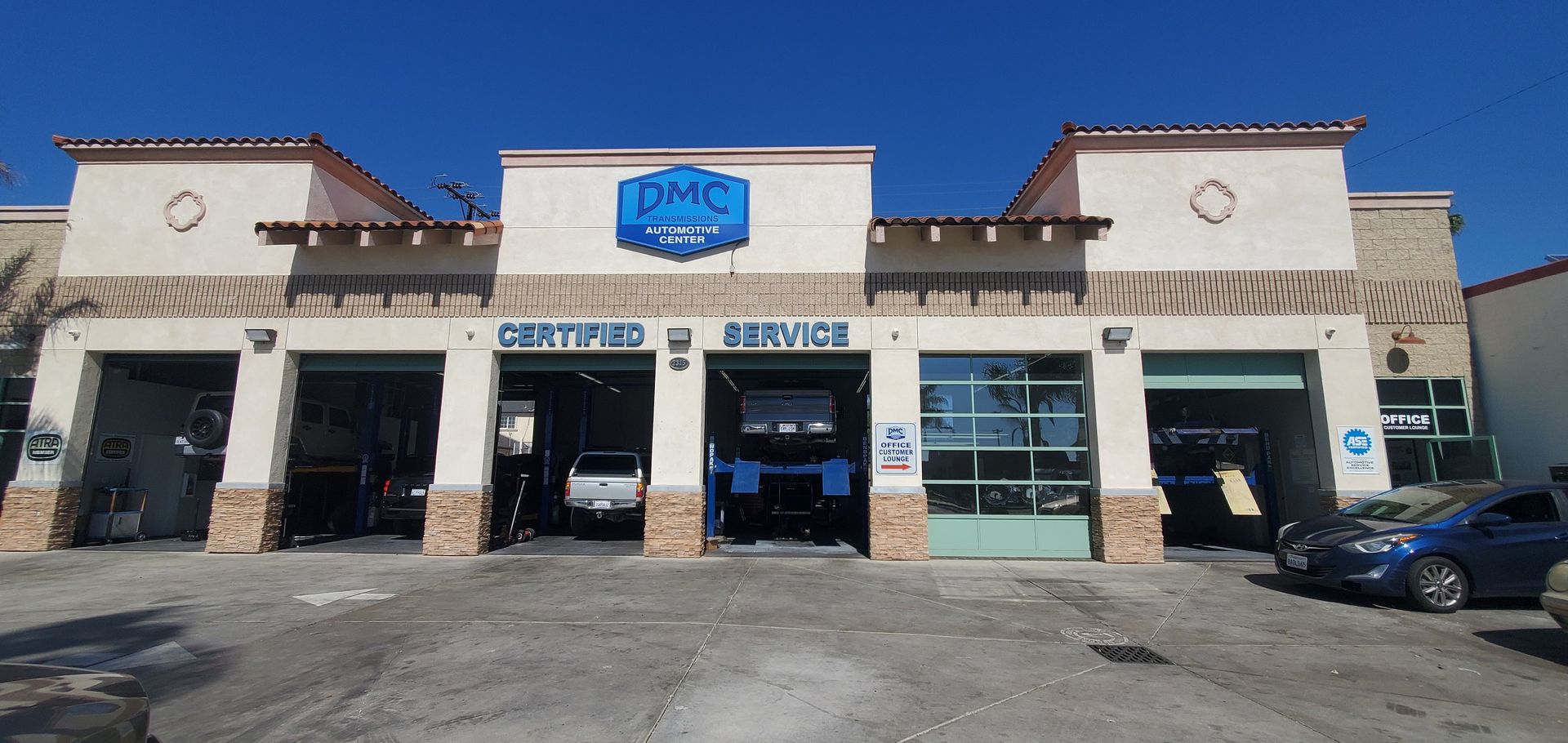
auto diagnostic service page, call us at (805) 652-2221, or stop by 2325 E Thompson Blvd in Ventura.


FAQs

Will the check engine light go off on its own without a repair?

Possibly, if the condition that triggered it was truly one-time and is no longer present. However, most intermittent faults are conditions that will recur. Even if the light turns off, the stored fault code remains accessible to a technician. Having it read is the only way to know whether the issue has actually resolved.


Does an intermittent check engine light affect my Smog Check?

It can. If the light illuminated recently and the OBD monitors have not completed a full drive cycle sequence since then, the vehicle may fail the readiness portion of the Smog Check even if the light is currently off. Having the vehicle evaluated before your smog test is the best way to avoid a failed test.


Can a loose gas cap cause an intermittent check engine light?

Yes. A loose or faulty gas cap is one of the most common causes of an intermittent P0440 or P0442 EVAP code. The system detects a pressure drop in the fuel vapor recovery system, sets a code, and may clear it if the cap is tightened or the pressure drops into spec temporarily. If your light has been coming on and off, a quick check of the gas cap is a reasonable first step, though it is not the only possibility.


Our Location


DMC Automotive Repair


Address:
2325 E Thompson Blvd, Ventura, CA 93003 


Phone Number:
(805) 652-2221


Hours: Monday-Friday, 7:00 AM - 6:00 PM

check engine light on | DMC Automotive Repair
By JR Luna • October 22, 2026
The check engine light has a specific meaning most drivers get wrong. DMC Automotive's JR Luna explains what triggers it, what it monitors, and when to act.
car dashboard | DMC Automotive Repair
By JR Luna • October 8, 2026
A flashing check engine light is not the same as a steady one. JR Luna at DMC Automotive explains exactly why it flashes and what you should do in Ventura.
vehicle on roadway | DMC Automotive Repair
By JR Luna • September 23, 2026
Hearing a clunk, squeal, or rattle from under your car? Here is how to tell brake noise from suspension noise and when to get it checked in Ventura.
tire and rim | DMC Automotive Repair
By JR Luna • September 23, 2026
Warped rotors cause pedal pulsing and reduced stopping power. Learn the real causes and what to do about them from our technicians at DMC Automotive in Ventura.
vehicle braking | DMC Automotive Repair
By JR Luna • September 9, 2026
Brake job costs in Ventura depend on your vehicle and what needs replacing. Here is what to expect for pads, rotors, and more at DMC Automotive Repair.
By JR Luna • September 2, 2026
Not sure what a brake inspection covers? Our ASE-certified technicians at DMC Automotive Repair in Ventura walk you through every step, start to finish.
highway overpass | DMC Automotive Repair
By JR Luna • August 25, 2026
Grinding brakes mean metal is contacting metal. DMC Automotive in Ventura explains what causes it, what it damages, and why waiting makes the repair far more expensive.
vehicle wheel | DMC Automotive Repair
By JR Luna • August 12, 2026
A soft or spongy brake pedal is a warning sign you should not ignore. DMC Automotive in Ventura explains the most common causes and what to do next.
gearshift | DMC Automotive Repair
By JR Luna • August 3, 2026
Not sure if you really need a brake fluid flush? DMC Automotive in Ventura explains what it is, why it matters, and when the service is actually necessary.
By JR Luna | LinkedIn • July 27, 2026
Brake pads are one of the most frequently replaced components on any vehicle, but the honest answer to how long they last is that it depends. Most pads are rated to last somewhere between 30,000 and 70,000 miles, but that range is wide for a reason. Where you drive, how you drive, and what type of pads are installed all play a role. For drivers in Ventura, local conditions shape brake pad life more than most people expect. What the Manufacturer Numbers Actually Mean When a brake pad manufacturer lists a lifespan estimate, that figure reflects controlled testing, not the reality of daily driving in coastal California. The 30,000 to 70,000 mile range assumes a mix of city and highway use under moderate conditions. Ventura driving does not always cooperate with those assumptions. The grades around Ondulando and the foothills put consistent downhill demand on the front brakes. Stop-and-go traffic through Midtown Ventura and along Thompson Boulevard and Victoria Avenue during peak hours generates repeated heat cycles that accelerate wear. Coastal humidity and marine air, while not directly wearing the pads themselves, contribute to rotor surface rust that can affect how pads bed in and wear over time. After more than 18 years servicing vehicles in Ventura, we see this pattern consistently. Vehicles driven mostly in local stop-and-go traffic come through our shop with pads worn well below the 50,000-mile midpoint far more often than national averages suggest. The combination of repeated heat cycles in congested city traffic and the steady grade demands east of the city adds up faster than most drivers expect. Driving Habits That Shorten Brake Pad Life A few habits move your pads toward the lower end of that lifespan range faster than most drivers realize. Riding the brakes rather than coasting is one of the most common. On descents toward Montalvo or coming off the foothills east of the city, sustained light brake pressure generates more heat and more wear than a few firm, deliberate stops followed by coasting. Following too closely forces more frequent and more abrupt braking. Even low-speed stops under heavy demand add up over thousands of miles. Vehicle weight matters as well. Trucks, SUVs, and vehicles that regularly carry heavy loads or tow place more demand on the braking system. A loaded pickup stopping repeatedly in traffic will wear through pads considerably faster than a compact sedan driving the same route. Waiting too long between inspections allows pads to wear completely through. When pad material reaches the metal backing plate, metal presses directly against the rotor during every stop, and that damages both components at once. The vehicles we see with the most extensive brake repairs are almost always the ones where the early warning squeal was brushed aside for several weeks. Once the grinding begins, the rotor typically needs replacement alongside the pads, which adds considerably to the overall repair cost. Driving Habits That Help Your Pads Last Longer The good news is that a few adjustments can meaningfully extend the life of your pads. Increasing your following distance on busy stretches like the 101 gives you room to decelerate gradually rather than brake sharply. Anticipating traffic flow and lifting off the accelerator early lets the vehicle slow before you need the pedal. On long downhill stretches, using a lower gear to let engine braking do some of the work reduces how much demand lands on the brake system. These are not complicated changes, but over thousands of miles they add up to noticeably longer pad life and lower maintenance costs. How to Tell When Pads Are Ready for Replacement Mileage is a useful reference point, but your brakes will usually signal when they need attention before the numbers say anything definitive. A high-pitched squeal when you apply the brakes is the most common first sign. Most pads include a small metal wear indicator designed to contact the rotor and produce that sound when material gets thin. It is a built-in warning system, not an accident. A grinding or growling sensation is a more serious signal, indicating that pad material has worn through entirely. A pulsing pedal, longer stopping distances, or a brake warning light on the dashboard all warrant a prompt inspection. The Motorist Assurance Program , an automotive industry consumer organization, recommends having brake pads inspected at every oil change or tire rotation to catch wear before it becomes a safety concern. That recommendation aligns with what we observe in the shop and with broader safety data. According to Automotive Fleet , poor brake condition is a contributing factor in more than 20 percent of vehicle collisions. Staying ahead of brake wear is one of the most straightforward ways to protect yourself on the road. Ready to find out exactly where your brake pads stand? Our ASE-certified technicians will measure pad thickness, check your rotors, and give you a clear picture of what your vehicle needs and what it does not. Book your inspection at DMC Automotive Repair . DMC Automotive Repair is a licensed California Automotive Repair Dealer. You can verify our shop license through the California Bureau of Automotive Repair shop locator , and our team's ASE certifications are verifiable directly through the National Institute for Automotive Service Excellence . FAQs Is 30,000 miles too soon to need new brake pads? Not necessarily, especially for Ventura drivers. Heavy local traffic and hilly terrain can shorten pad life considerably below the national average. If you are hearing squealing or noticing longer stopping distances, have them inspected regardless of mileage. Should front and rear brake pads be replaced at the same time? Not always. Front brakes handle the majority of stopping force and typically wear faster, so replacing them separately is common. A proper inspection will tell you exactly what each axle needs. What are the warning signs that my brake pads need to be replaced? Listen for a high-pitched squeal when you apply the brakes, which is the built-in wear indicator doing its job. Grinding, a pulsing pedal, or longer stopping distances are more urgent signals that the pad material may be fully worn through. At DMC Automotive Repair, we check pad thickness as part of every inspection so you always have an accurate picture. Our Location DMC Automotive Repair Address: 2325 E Thompson Blvd, Ventura, CA 93003 Phone Number: (805) 652-2221 Hours: Monday–Friday, 7:00 AM – 6:00 PM
More Posts