TLDR
- The check engine light monitors your vehicle's emissions-related systems, not every mechanical component
- It signals that the onboard diagnostic computer detected a fault and stored a code, but the code is a clue, not a complete diagnosis
- A steady light warrants prompt attention; a flashing light means stop driving as soon as safely possible
In our 18 years working on vehicles in Ventura, we have seen check engine lights that turned out to be nothing more than a loose gas cap, and others that revealed engines in the early stages of serious damage. The light itself does not tell you which situation you are in. What it tells you is that a fault has been recorded, and the system wants you to investigate it.
What the Light Actually Monitors
The check engine light is the visible alert produced by your vehicle's onboard diagnostic system, which is required on all gasoline-powered passenger vehicles and light-duty trucks from model year 1996 onward. Every vehicle sold in the United States since that year includes a standardized set of diagnostic monitors, sensor inputs, and a common connector that allows any licensed shop to read the stored fault codes.
The system monitors components that affect emissions performance: the catalytic converter, oxygen sensors, spark plugs and ignition coils, fuel injectors, evaporative emission control system, mass airflow sensor, and more. When any of these fall outside acceptable parameters, the computer sets a diagnostic trouble code and illuminates the light.
What the Code Tells You and What It Does Not
A fault code narrows the field. A P0420 code tells a technician that the catalytic converter on bank one is operating below the efficiency threshold the computer expects. It does not tell the technician whether the converter itself has failed, whether an upstream oxygen sensor is giving bad readings, or whether a small exhaust leak is skewing the data.
This is the gap that causes the most confusion for drivers who read their own codes with a handheld reader. The code is a starting point. A complete diagnosis involves testing the components related to that code to identify which one actually failed.
According to the
CarMD 2023 Vehicle Health Index, catalytic converter replacement was the single most common check engine light-related repair in 2022, with an average cost of $1,313 including parts and labor. The second and third most common were oxygen sensors at $242 and ignition coil and spark plug work at $392. The overall average check engine light repair came in at $403, a range that illustrates just how wide the variety of underlying causes can be.
The Difference Between Steady and Flashing
A steady check engine light means a fault has been recorded and is present. The vehicle is still drivable in the short term, but should be evaluated promptly. An ignored steady light often escalates. Oxygen sensor failures that go unaddressed can damage the catalytic converter. Minor misfires can degrade into more severe ones.
A flashing check engine light means the fault is active and severe, specifically a misfire significant enough that the computer is warning you about catalytic converter damage from unburned fuel passing through the exhaust. We recommend not driving further than necessary to reach a shop when the light is flashing.
Our Approach to Check Engine Diagnostics
When a vehicle comes in with a check engine light, our process starts with a scan for stored and pending codes, followed by a visual inspection of components related to those codes, and in many cases live data monitoring to see how sensors are behaving in real time. We explain our findings to every customer before proceeding with any repair.
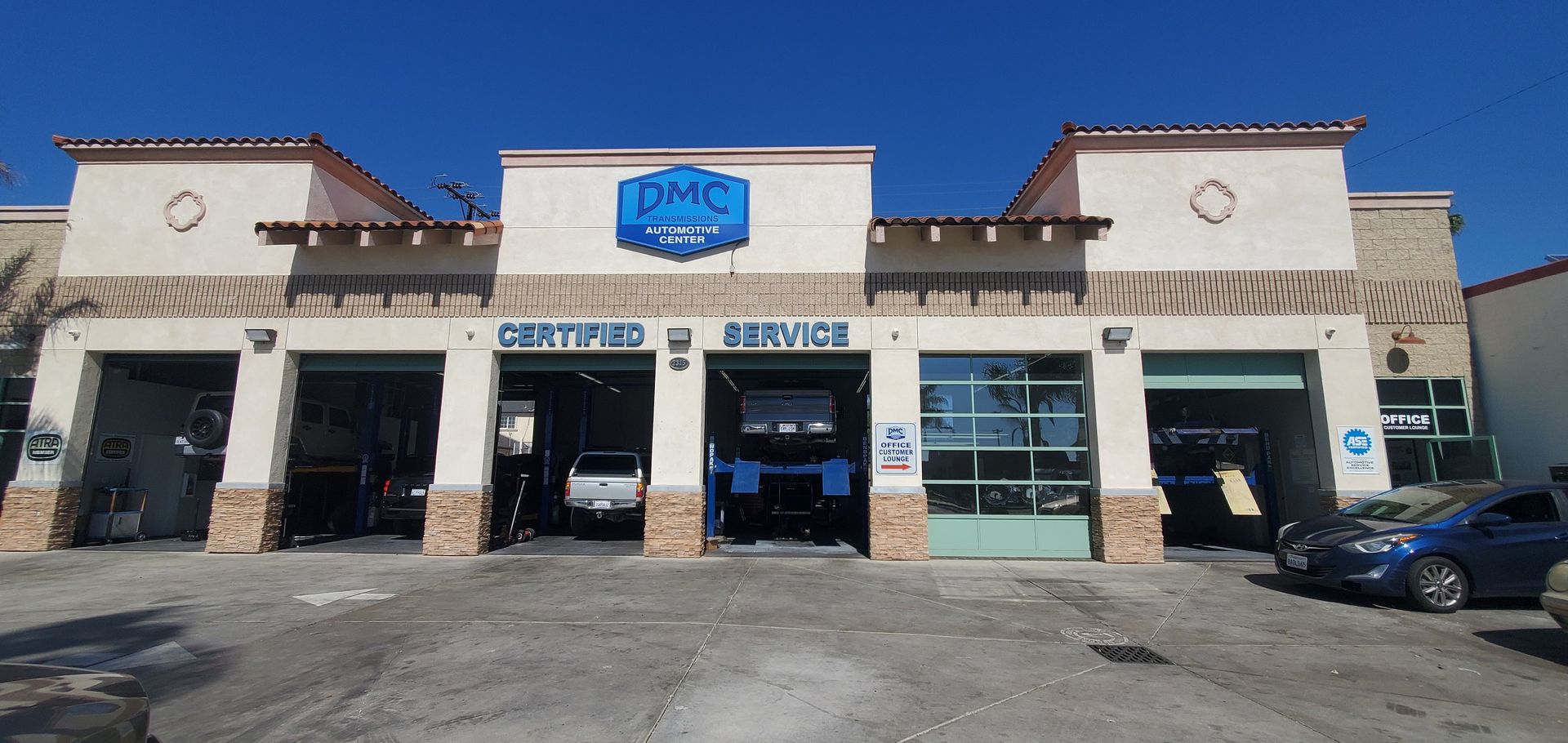
California requires auto repair shops to be licensed through the Bureau of Automotive Repair. You can verify any shop's license at
bar.ca.gov/locator. DMC Automotive is a fully licensed California ARD.
If your
check engine light is on, our team is ready to help. Call us at (805) 652-2221, or come by 2325 E Thompson Blvd in Ventura.
FAQs
Does the check engine light mean my engine is about to fail?
Not necessarily. The light covers a wide range of issues, most of them emissions-related faults that are manageable with timely repair. However, some conditions it monitors, like a severe misfire or a failing catalytic converter, can worsen quickly if ignored. The only way to know which situation you have is to have the codes read and the relevant components tested.
Can I drive with the check engine light on?
For a short distance to a repair shop, yes, if the light is steady. If the light is flashing, reduce speed, avoid hard acceleration, and get to a shop as quickly as safely possible. A flashing light indicates an active misfire with potential for rapid catalytic converter damage.
Why did my check engine light come back on after the parts store cleared the codes?
Clearing codes erases them temporarily but does not fix the underlying fault. The computer will detect the same condition on subsequent drive cycles and re-illuminate the light. Clearing codes without addressing the cause is not a repair.
Our Location
DMC Automotive Repair
Address:
2325 E Thompson Blvd, Ventura, CA 93003
Phone Number:
(805) 652-2221
Hours: Monday-Friday, 7:00 AM - 6:00 PM