Why Stop-and-Go Traffic is the Hardest Thing You Can Do to Your Car
Ask most drivers what they consider hard on a vehicle and they will tell you highway miles. Long road trips. High speeds. Heavy towing. The intuition makes a certain kind of sense. Fast driving feels aggressive. It sounds demanding. Surely that must be what wears a car out.
The reality that every experienced mechanic knows is almost exactly the opposite. Highway miles are among the gentlest experiences a modern drivetrain can have. A vehicle cruising at a steady 65 miles per hour on a flat freeway is operating in a state of remarkable mechanical harmony. The engine is turning at low RPM, the transmission is locked in its highest gear, the torque converter is fully locked up, and heat is being generated and dissipated at a stable, manageable rate.
Stop-and-go traffic is something else entirely. The crawling commute, the endless traffic signal cycle, the freeway that moves at walking pace for thirty minutes before opening up for half a mile and then stopping again. This is where vehicles age. This is where transmissions suffer. And this is where understanding a little bit of physics can make a meaningful difference in how long your drivetrain lasts.
The Physics of Heat in a Stopped World
To understand why stop-and-go traffic is so damaging you need to understand the central role that heat plays in transmission wear. Heat is not merely a byproduct of mechanical friction. At sufficient levels it becomes the primary mechanism of component destruction.
Where the Heat Comes From
Every time your vehicle accelerates from a stop the transmission must transfer engine torque to the wheels while managing the speed difference between the engine's output shaft and the drivetrain. In an automatic transmission this is primarily handled by the torque converter during low-speed acceleration and by the clutch packs as they engage to hold specific gear ratios. In a dual-clutch transmission it is handled by the clutch packs directly with no torque converter buffer.
During normal highway driving this heat generation is brief and manageable. The vehicle accelerates, the clutches fully engage, and the slipping phase that generates heat ends quickly. The transmission fluid absorbs the heat and carries it to the cooler where it is dissipated.
In stop-and-go traffic this cycle never completes. The vehicle begins to accelerate, the clutches begin to engage, and then traffic slows again before a full clean engagement can occur. The clutch packs spend an extended period in partial slip, generating heat continuously without ever reaching the fully locked state where heat generation essentially stops.
The Cooling System That Cannot Keep Up
Under normal driving conditions a transmission's cooling system is more than adequate for the heat load placed on it. The fluid cooler, typically integrated into the radiator or mounted as a separate unit, has sufficient capacity to manage the heat generated during normal acceleration cycles.
Stop-and-go traffic defeats this system through accumulation. Each partial clutch engagement adds heat to the fluid faster than the cooler can remove it. Fluid temperature climbs steadily. And here is the critical point that most drivers do not appreciate: transmission fluid does not simply become less effective as it heats up. It undergoes chemical changes that permanently degrade its protective properties.
Automatic transmission fluid is formulated with a precise package of friction modifiers, anti-wear additives, and viscosity improvers that work together to protect clutch surfaces and metal components. When this fluid is repeatedly exposed to temperatures above its design range these additives break down chemically. The fluid becomes darker, thinner at operating temperature, and progressively less able to maintain the fluid film between metal surfaces that prevents direct contact wear.
This is why a vehicle with 80,000 miles of city driving can have a transmission in significantly worse condition than a vehicle with 120,000 miles of predominantly highway use. The odometer tells you how far the car has gone. It tells you almost nothing about how hard the transmission has worked to get there.
The Dual-Clutch Transmission: City Traffic's Most Vulnerable Victim
While stop-and-go traffic is hard on every type of automatic transmission it is particularly punishing for dual-clutch transmissions. Understanding why requires a brief look at how a DCT differs from a conventional automatic.
How a DCT Handles Low-Speed Traffic
A dual-clutch transmission uses two separate clutch packs, one handling the odd gears and one handling the even gears, to enable extremely fast and efficient shifts. At highway speeds this design is brilliant. The next gear is always pre-selected and ready, allowing shifts to occur in milliseconds with virtually no interruption in power delivery.
At low speeds in stop-and-go traffic the DCT faces a fundamental challenge that its designers have worked hard to address but never fully solved. Because there is no torque converter to absorb the speed difference between the engine and the drivetrain during very slow speed maneuvering the clutch packs must handle this function directly. In crawling traffic the clutch is never fully engaged or fully disengaged. It exists in a prolonged slip state that generates significant heat with nowhere to go.
The Volkswagen and Ford DCT Lessons
The automotive industry learned this lesson the hard way through some notable real-world failures. Volkswagen's Direct Shift Gearbox, which appeared in a wide range of models through the 2000s and 2010s, developed a reputation for shuddering and premature wear in owners who used their vehicles primarily for city commuting. Ford's PowerShift dual-clutch transmission, used in the Focus and Fiesta, generated a significant number of customer complaints and legal action related to low-speed clutch shudder and wear that was directly tied to stop-and-go driving conditions.
In both cases the technology itself was not fundamentally flawed. The problem was the mismatch between how the transmission was engineered to operate most efficiently and the real-world driving conditions a large percentage of owners encountered every day.
How to Drive a DCT in Stop-and-Go Traffic
If you own a dual-clutch transmission equipped vehicle and your daily commute involves significant stop-and-go traffic there are specific driving habits that can meaningfully reduce the heat load on your clutch packs and extend the life of the transmission.
Use the Brake, Not the Clutch
The single most protective habit you can develop in a DCT vehicle in slow traffic is to use your brake pedal to hold position rather than allowing the transmission to manage your speed through clutch slip. When traffic is moving at walking pace and you would normally allow the vehicle to creep forward using light throttle, try instead to bring the car to a complete stop and hold it with the brake. Advance in brief, clean acceleration events separated by complete stops rather than continuous creeping.
This driving style feels slightly less natural than a smooth creep but it gives the clutch packs the brief fully disengaged recovery time they need to dissipate heat between engagements.
Give Yourself More Following Distance
This recommendation has both a safety dimension and a mechanical one. A larger following gap in stop-and-go traffic allows you to manage your speed using gentle deceleration and acceleration rather than repeated hard stops and starts. Smooth, gradual speed changes require less abrupt clutch engagement and generate less heat per cycle than the aggressive stop-start pattern that results from following too closely.
In practical terms adding two or three car lengths of additional following distance in heavy traffic can meaningfully reduce the number of full stop-and-restart cycles your transmission performs during a commute.
Shift to Neutral During Extended Stops
During prolonged stops of more than thirty seconds, such as at a long traffic signal or in truly gridlocked traffic, shifting your DCT vehicle into neutral removes the clutch load entirely. When you hold a DCT in drive while stationary the transmission is managing the relationship between the stationary drivetrain and the idling engine through partial clutch engagement. Shifting to neutral eliminates this load and gives the clutch packs and fluid a brief recovery period.
This recommendation applies primarily to DCT vehicles. Conventional automatic transmission vehicles with torque converters handle stationary idle in drive with significantly less stress on the clutch components.
Watch Your Transmission Temperature
Many modern vehicles allow you to display transmission fluid temperature through the infotainment system or driver information display. If your vehicle has this capability we strongly recommend monitoring it during your typical commute. Understanding what your normal operating temperature range looks like makes it much easier to identify when conditions are pushing the system beyond its comfort zone.
If you notice transmission temperature climbing significantly during stop-and-go commutes and your vehicle has a sport mode or manual shift mode, using a lower gear selection during these periods can sometimes help by changing the way the transmission manages the clutch engagement. Consult your owner's manual for specific guidance on your vehicle's transmission management options.
The Maintenance Response to City Driving
Beyond driving habits there is a maintenance dimension to protecting a transmission that primarily operates in stop-and-go conditions.
Accelerated Fluid Service Intervals
As we discussed in our piece on CVT transmissions the standard fluid service intervals published in your owner's manual are typically derived from testing under a mix of driving conditions that includes a significant proportion of highway miles. If your vehicle sees predominantly city and stop-and-go driving the thermal stress on your fluid is considerably higher than these intervals assume.
For vehicles driven primarily in heavy urban traffic we recommend having transmission fluid condition evaluated at roughly two thirds of the manufacturer's recommended service interval. In many cases the fluid will show signs of thermal degradation well before the standard mileage recommendation would suggest a service is necessary.
The Cooler Upgrade Option
For vehicles that spend a significant portion of their operating life in heavy stop-and-go conditions an auxiliary transmission cooler can be a worthwhile investment. An external cooler added to the cooling circuit increases the system's total heat rejection capacity, helping to keep fluid temperatures in a safer range during extended slow-speed operation. This modification is particularly worth considering for DCT-equipped vehicles used primarily for urban commuting.
What Your Commute Is Really Costing You
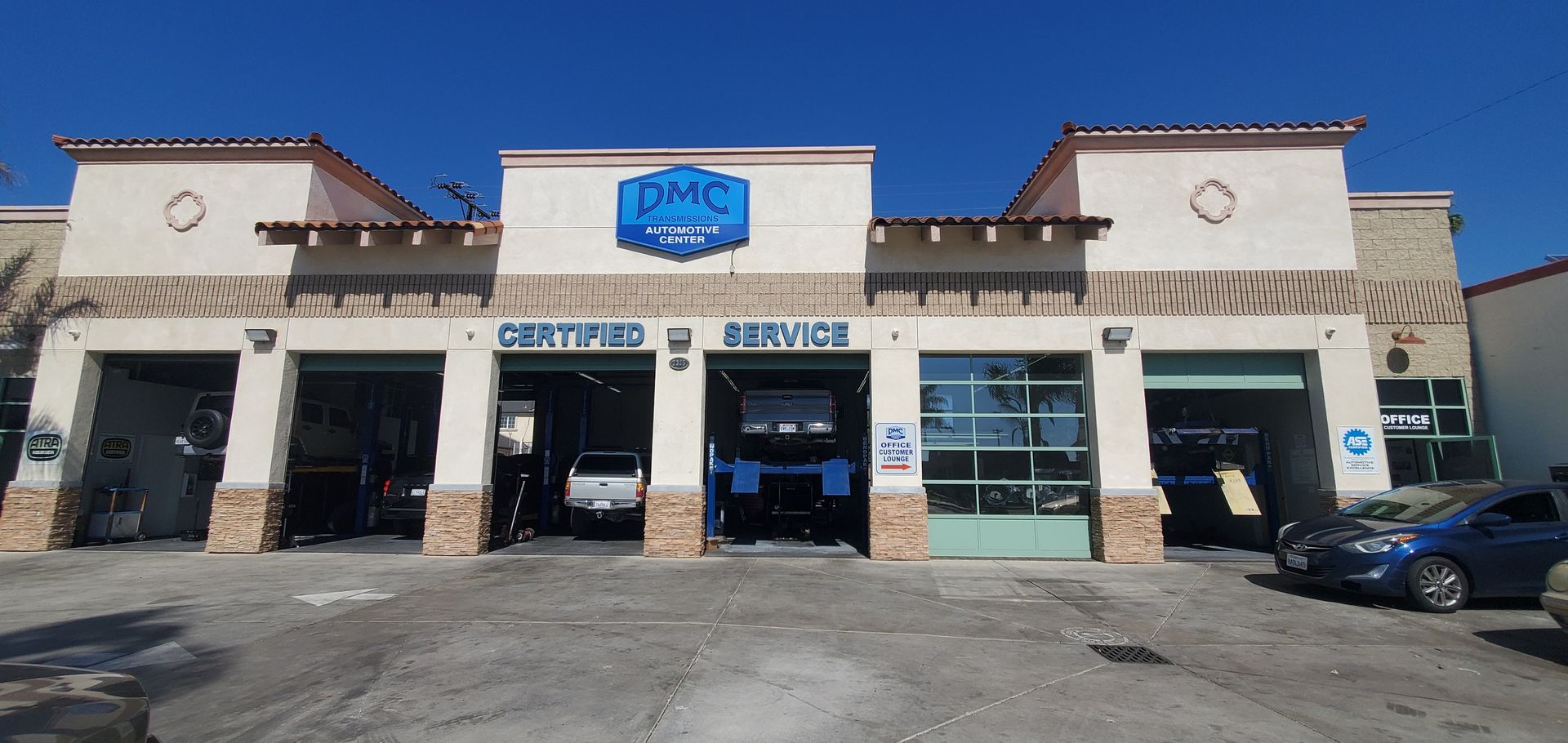
The final point worth making is a straightforward one. The relationship between stop-and-go driving and transmission wear is not hypothetical or theoretical. It shows up in the condition of the vehicles we inspect every day in Ventura.
A vehicle with a city-heavy driving history will typically show transmission fluid that is darker, more degraded, and closer to the end of its useful service life at any given mileage compared to a vehicle with a similar odometer reading but a highway-dominant history. The clutch packs in DCT vehicles driven primarily in traffic show wear patterns that are distinct from those in vehicles of the same model driven on open roads.
None of this means that city driving is something to be avoided or that your commute is a death sentence for your transmission. It means that awareness and appropriate maintenance are especially important for drivers whose vehicles spend significant time in the kind of traffic that is an unavoidable daily reality across much of Ventura County.
If you have questions about the condition of your transmission after years of commute-heavy driving, or if you would like a fluid assessment and cooling system check before summer heat adds another layer of thermal stress to the equation, our team is here to help you stay ahead of the problem.
Address:
2325 E Thompson Blvd, Ventura, CA 93003
Phone Number:
(805) 652-2221
Hours: Monday-Friday: 8 AM - 5 PM