TLDR
- The most frequently occurring OBD-II codes involve the catalytic converter, oxygen sensors, fuel trim, EVAP system, and misfires
- A code identifies a system or threshold exceeded, not the failed component, and a proper diagnosis is required before any part is replaced
- Most P-codes are emissions-related, which is why they trigger the check engine light
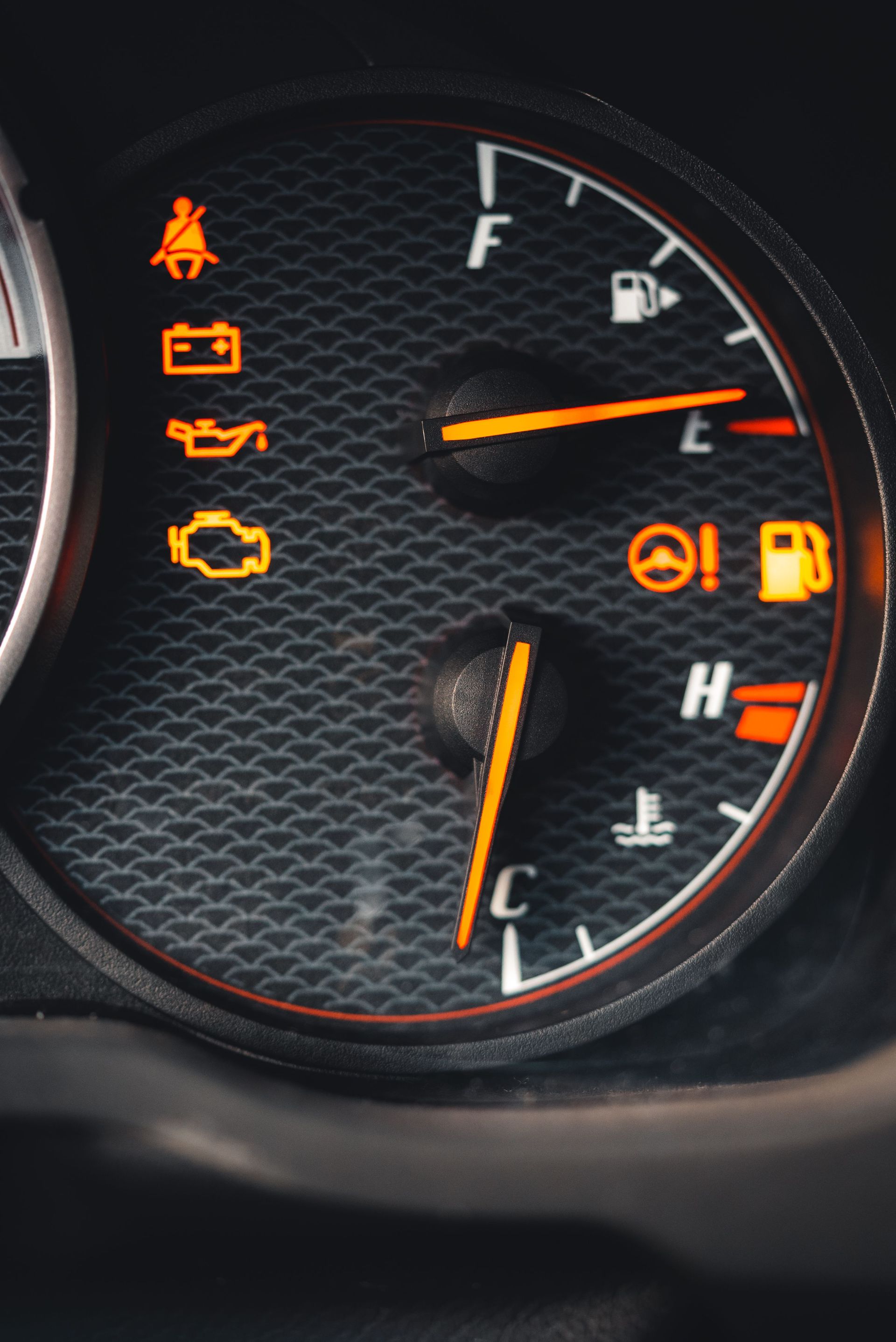
Every OBD-II code belongs to a family. P-codes are powertrain faults (engine and transmission). B-codes are body systems. C-codes are chassis. U-codes are communication networks. When a check engine light comes on, it is almost always triggered by a P-code, since the check engine light is specifically connected to the emissions monitoring system.
Real-world state emissions testing data from Illinois, cited by [AA1Car's analysis of common OBD-II codes](https://www.aa1car.com/library/common_trouble_codes.htm), shows that about 6.3% of vehicles fail their initial emissions inspection because of stored fault codes. When grouped by system, EVAP failures account for 24.3% of code-based failures, engine misfires for 17.3%, lean fuel trim for 17.2%, and catalytic converter codes for 16.4%.
P0420. Catalyst System Efficiency Below Threshold (Bank 1)
P0420 is the single most common check engine light code in state emissions testing data, accounting for 13.2% of code-related failures in Illinois emissions test data. It means the downstream oxygen sensor is not seeing the conversion efficiency the catalytic converter should be producing.
The important thing to understand about P0420 is that it does not always mean the catalytic converter is failed. An oxygen sensor that is reading poorly can produce a false P0420. An exhaust leak between the upstream sensor and the converter skews the data. A rich-running engine that has been feeding the converter excess fuel over time may have damaged it. Our diagnostic process tests the converter, the oxygen sensors, and the exhaust system together before recommending a converter replacement.
P0171 and P0174. System Too Lean (Bank 1 and Bank 2)
P0171 (Bank 1) at 10.4% and P0174 (Bank 2) at 6.8% indicate that the engine is running lean, with too much air and not enough fuel. The causes are numerous: a vacuum leak, a dirty or failing mass airflow sensor, a weak fuel pump, a clogged fuel injector, or an oxygen sensor that is biasing the fuel trim incorrectly.
These are diagnosis-driven codes. Replacing the oxygen sensor or fuel injector before testing them is the most common way to spend money without solving the problem. A lean code requires following the diagnostic path: checking live fuel trim values, testing MAF sensor output, and inspecting for vacuum leaks.
P0300. Random Misfire Detected
P0300 means the computer detected a misfire event that it could not attribute to a single cylinder consistently. Cylinder-specific misfire codes (P0301 through P0308) point to one cylinder. P0300 appears when the misfire is jumping between cylinders or is genuinely random. Common causes are spark plug wear, ignition coil degradation, a lean condition affecting multiple cylinders, or low compression.
In our 18 years of diagnosing vehicles in Ventura, a P0300 code paired with a P0171 or P0174 is a common combination that points toward a vacuum leak or fuel delivery problem rather than individual coil or plug failures.
P0440, P0442, P0456. EVAP System Faults
The EVAP (evaporative emission control) system captures fuel vapors from the fuel tank to prevent them from venting to the atmosphere. When this system has a leak, even a small one, the pressure the computer monitors drops and a fault code is stored. P0440 is a general EVAP failure. P0442 is a small leak. P0456 is a very small leak.
The most common cause of a P0442 or P0456 is a loose or damaged gas cap. More significant EVAP codes may involve the purge valve, vent valve, charcoal canister, or a cracked fuel vapor hose.
P0401. EGR Flow Insufficient
The exhaust gas recirculation system recirculates a portion of exhaust gas back into the intake manifold, which reduces combustion temperatures and NOx emissions. A P0401 code means the computer determined EGR flow was below the expected threshold. This is often caused by carbon buildup in the EGR valve or passages, or a failed EGR valve solenoid.
California requires auto repair shops to be licensed through the Bureau of Automotive Repair. Verify any shop's license at [bar.ca.gov/locator](https://bar.ca.gov/locator). DMC Automotive is a fully licensed California ARD.
If your check engine light is on and you want to understand what the code means, our team will walk you through the diagnosis before recommending any repairs. Visit our [auto diagnostic service page](https://www.dmcautoventura.com/auto-diagnostic-ventura-ca), call us at (805) 652-2221, or stop by 2325 E Thompson Blvd in Ventura.
FAQs
Why did replacing the part the code pointed to not fix the check engine light?
Because OBD-II codes identify systems, not failed parts. A P0420 catalytic converter code can be triggered by a faulty oxygen sensor. A P0171 lean code can come from a vacuum leak, not a failing injector. When a replacement part does not clear the code, it usually means a different component in that system is the actual cause. A proper component test before replacement avoids this outcome.
Can I clear a code and just see if it comes back?
Clearing the code does not fix the underlying fault. The computer will detect the same condition on subsequent drive cycles and re-illuminate the light. However, when the underlying fault is genuinely intermittent, a loose connector for example, the code may not immediately return. In those cases, clearing and monitoring is sometimes part of the diagnostic process, with the understanding that additional testing is needed if it returns.
Do all OBD-II codes trigger the check engine light?
No. Pending codes are stored when the system detects a potential fault but has not yet confirmed it across two or more consecutive drive cycles. Pending codes do not illuminate the check engine light. A technician with a scan tool can read pending codes even before the light comes on, which is why connecting a scan tool to a vehicle with an intermittent problem, even with the light currently off, often reveals what the system has been tracking.
Our Location
DMC Automotive Repair
Address:
2325 E Thompson Blvd, Ventura, CA 93003
Phone Number: (805) 652-2221
Hours: Monday–Friday, 7:00 AM – 6:00 PM